Best Matcha Powder for Beginners
Looking for the best matcha powder for beginners? Discover top-rated, easy-to-use matcha brands perfect for your first sip. Start your matcha journey today!
If you’ve just discovered the world of matcha, you’re probably wondering, “Where do I even start?” Choosing the best matcha powder for beginners can feel overwhelming with so many options out there. The good news? You don’t need to spend a fortune or get confused by fancy labels. We will show you the best matcha powders that are beginner-friendly, taste great, and make it easy to fall in love with your new favorite drink.
Did You Know? 🍵
- Matcha is shade-grown for about 3–4 weeks before harvest — this increases chlorophyll and gives it that vibrant green color.
- One cup of matcha contains roughly the same antioxidants as 10 cups of regular brewed green tea.
- Traditional Japanese tea ceremonies have used matcha for over 800 years as a meditation aid for Zen monks.
- Only a few regions in Japan — such as Uji, Nishio, and Shizuoka — produce true ceremonial-grade matcha.
- Matcha leaves are never boiled; instead, the entire leaf is ground and consumed, maximizing nutrients like EGCG and L-theanine.
What Makes a Great Beginner Matcha?
Before we dive into the top recommendations, it’s important to know what you should look for when choosing your first matcha powder:
Color: Bright, vibrant green is a good sign of quality
Taste: You want a balanced flavor — smooth and slightly sweet, not overly bitter.
Grade: Look for ceremonial grade matcha for drinking straight, and culinary grade if you plan to cook or bake with it.
Origin: Japanese matcha (especially from Uji, Kyoto, or Nishio) is typically the best.
Best Matcha Powders for Beginners
Start your matcha journey with smooth, vibrant powders that whisk easily and taste delicious — perfect for your first bowl or latte.
⭐️⭐️⭐️⭐️⭐️ Top Pick: Encha Ceremonial


Top Pick — Encha Ceremonial Grade
Why it’s great: Smooth, mellow flavor and fully organic. Whisks easily into hot or cold water, perfect for lattes and first-time matcha drinkers.
| Grade: | Ceremonial (beginner-friendly) |
| Best for: | Lattes, smoothies, straight whisk |
| Origin: | Uji, Japan |
Other Excellent Beginner Options
Jade Leaf — Everyday Matcha
Bright and affordable; ideal for daily lattes and baking.
★★★★☆
Ippodo “Ummon” — Premium Pick
Rich, deep umami flavor for traditional whisked tea lovers.
★★★★☆
Matcha Konomi Akira — Organic Choice
Vibrant color, slightly sweet taste, great quality-to-price ratio.
★★★★☆
Kenko Matcha — Value Option
Reliable Japanese powder perfect for smoothies or baking.
★★★☆☆
Buying Tips for Beginners
- Ceremonial = smooth, bright, for drinking straight.
- Culinary = stronger, best for lattes & baking.
- Look for vibrant green color and fine texture — a sign of freshness.
- Store airtight, away from light, and refrigerate after opening.
⭐ Our Pick: Encha Ceremonial — easy to whisk, sweet and mellow for your first matcha experience.
Sources: EatingWell, Serious Eats, The Strategist, and Food & Wine matcha roundups (2024).
Finding a powder that balances taste, affordability, and ease of use is key when starting your journey with matcha.
1. Encha Ceremonial Organic Matcha
If you’re looking for the best matcha powder for beginners that’s both organic and high quality, Encha is a fantastic choice. Their ceremonial grade matcha is sourced directly from organic farms in Japan. It has a clean, mild flavor that’s perfect for sipping without any bitterness — ideal for new matcha drinkers.
Why beginners love it:
USDA Organic certified
Sweet, earthy taste without harsh bitterness
Grown in Uji, Japan, known for premium matcha
2. Matcha Konomi Akira Organic Ceremonial Matcha
Another strong contender for beginners is Matcha Konomi Akira. This matcha powder offers a smooth texture and slightly sweet undertones, making it a perfect match for those new to traditional Japanese tea ceremonies.
Highlights:
100% organic and stone-ground
Vivid emerald green color
Great for matcha lattes and traditional whisked matcha
Also, if you are looking for the best beginner matcha powder for lattes, this brand fits the bill beautifully.
3. Jade Leaf Organic Matcha Green Tea Powder
Jade Leaf is often mentioned when people ask for the best matcha powder for beginners because it offers both ceremonial and culinary grades. For starters, the ceremonial grade is recommended for drinking.
Key features:
Affordable yet high quality
Authentic Japanese origin
Smooth and easy to blend with water or milk
This brand is a smart pick if you’re budget-conscious but still want a traditional matcha experience.
Suggested for You


Suggested for You
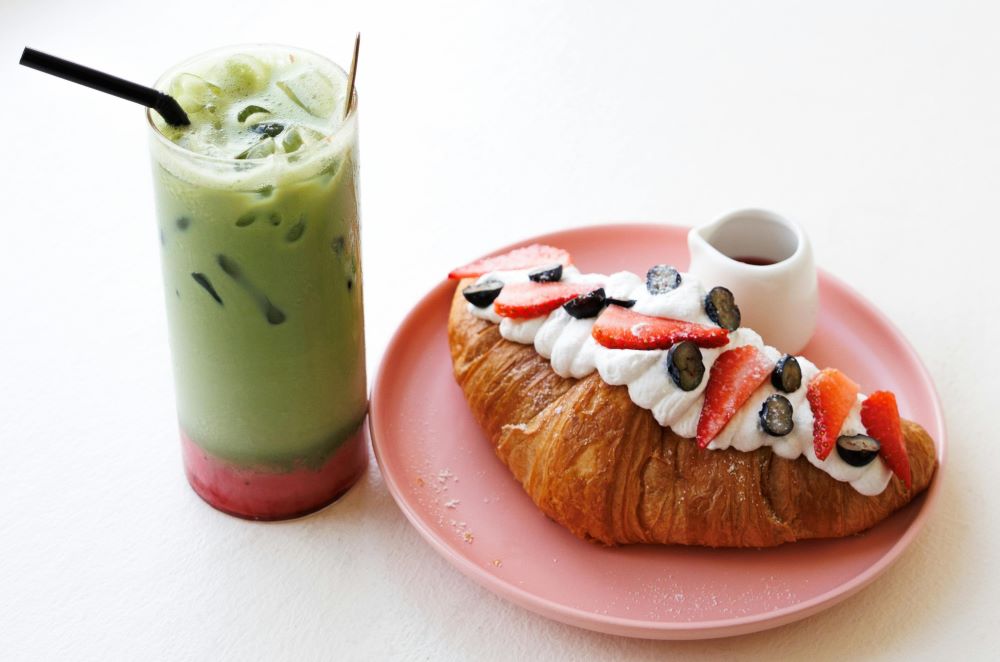
How to Re-create a Blank Street Blueberry Matcha at Home
Tips for Choosing the Best Matcha for Beginners
When picking your first matcha, keep these extra tips in mind:
Start small: Purchase smaller tins (30g or so) to try different brands without commitment.
Read reviews: Look for products with real customer feedback mentioning beginner friendliness.
Check freshness: Always opt for brands that clearly show a production or expiration date
Looking for where to buy matcha powder for beginners online can sometimes feel overwhelming. Start with trusted brands mentioned above and buy from reputable stores to avoid old or low-quality matcha.
Start Your Matcha Journey with Confidence
Finding the best matcha powder for beginners doesn’t have to be complicated. Whether you prefer to sip it traditionally or whip up a frothy matcha latte, the right starter powder will set the tone for your entire experience. Remember, the goal is to enjoy the vibrant flavor and health benefits without stress. With picks like Encha, Matcha Konomi, and Jade Leaf, you’re well on your way to mastering the art of matcha.
Ready to take your first sip?
Read More
How to Make Matcha Taste Better Easy Tips
Whether you’re trying to figure out how to make matcha less bitter or how to sweeten matcha without sugar, this guide has you covered. Let’s dive in… read more
Matcha FAQ — Quick answers for beginners
Short, practical answers to the questions most new matcha drinkers ask.
What’s the difference between ceremonial and culinary matcha?
Ceremonial matcha is harvested from the youngest, tender leaves and ground to a very fine powder — it’s smoother and best drunk whisked with water. Culinary (or latte) grade is slightly stronger and more astringent, designed to stand up when mixed into milk, smoothies, or baked goods.
How much matcha should I use for a beginner’s bowl or latte?
For a traditional bowl, start with 1–2 grams (about 1/2–1 teaspoon). For a latte, 1 to 1.5 teaspoons (2–3 g) gives a balanced flavor with milk. Adjust up or down to taste — beginners often prefer slightly less to avoid bitterness.
How do I make a smooth, clump-free matcha drink?
Use a fine-mesh sifter to remove clumps, add a small amount of warm (not boiling) water to make a paste, then whisk in a zig-zag motion with a bamboo whisk (chasen) until frothy. For lattes, whisk the paste into milk and sweeten if desired.
How should I store matcha to keep it fresh?
Matcha oxidizes quickly. Keep it in an airtight container, away from heat, light, and moisture. After opening, refrigerate and use within 4–8 weeks for best flavor (smaller jars help keep it fresh).
Is matcha high in caffeine? Will it keep me awake?
Matcha contains more caffeine per gram than regular green tea because you consume the whole leaf — but it also contains L-theanine, which smooths the effect and promotes calm alertness. A typical serving (1–2 g) has a moderate caffeine boost — similar to a weak cup of coffee.
Can I use matcha in baking and smoothies?
Yes — culinary-grade matcha is ideal for baking, smoothies, and lattes since its stronger flavor stands up to sweeteners and other ingredients. Use ceremonial for drinks you want to sip and savor.
Matcha Glossary — Key Terms Explained
Learn the meanings of the most important matcha-related words and phrases used in this beginner’s guide.
Ceremonial Grade
The highest quality matcha, made from the youngest tea leaves. It’s smoother, more vibrant in color, and intended to be whisked and enjoyed on its own with water.
Culinary Grade
A slightly stronger, more robust matcha used for lattes, smoothies, and baking. It’s more affordable and designed to mix well with milk or sweeteners.
Umami
A Japanese term meaning “pleasant savory taste.” Good ceremonial matcha has a natural umami flavor — rich, smooth, and slightly sweet rather than bitter.
Chasen (Bamboo Whisk)
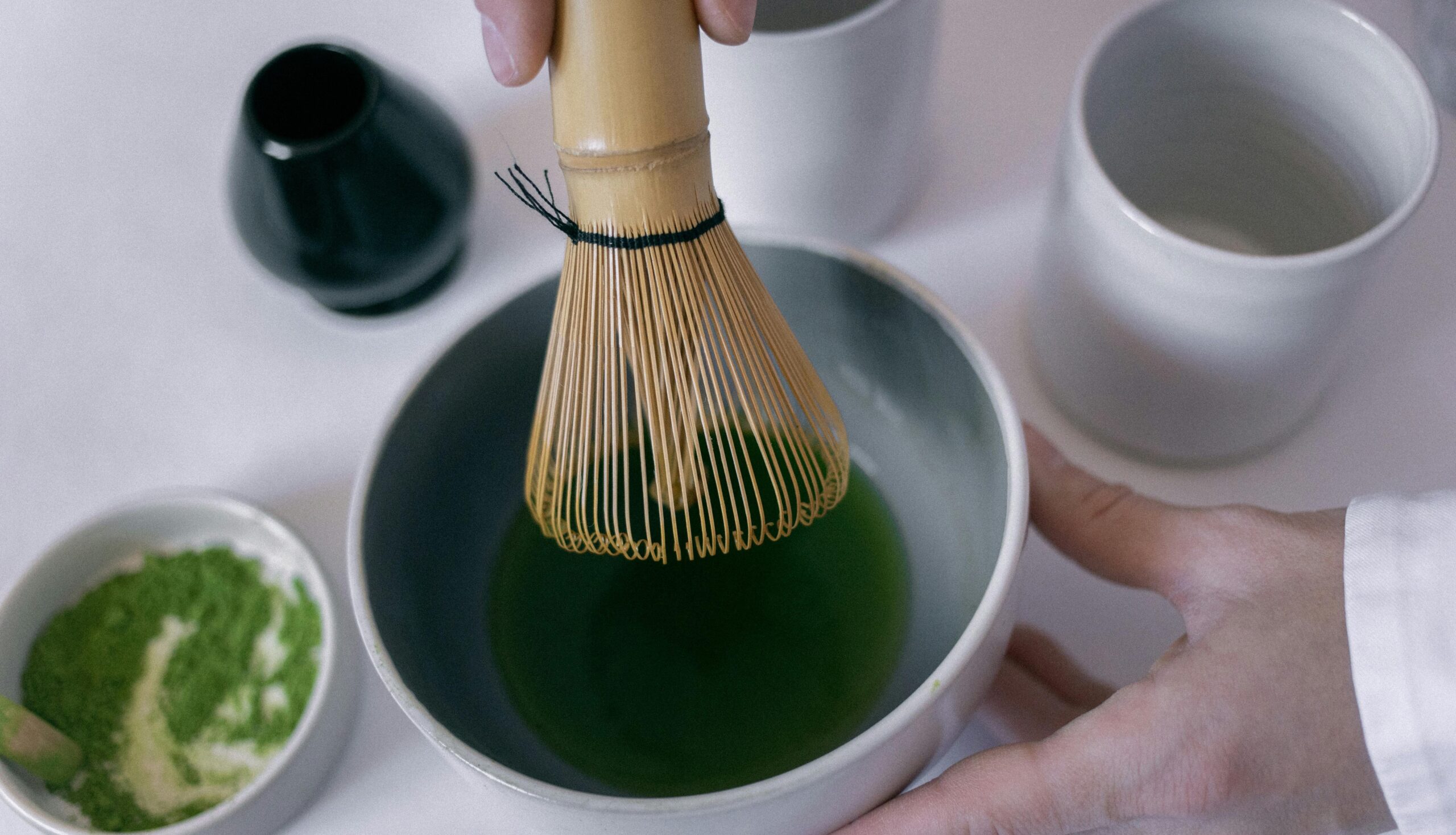
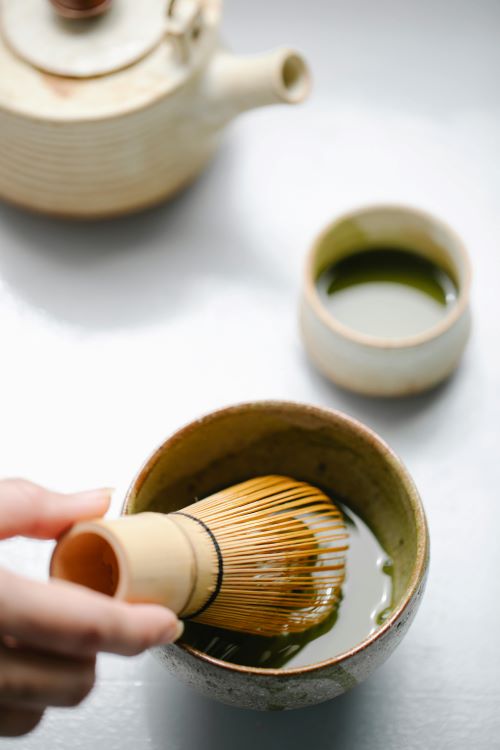
A traditional Japanese whisk made from split bamboo used to froth matcha powder with water into a smooth, foamy drink.
Chashaku
A slim bamboo scoop used to measure matcha powder — usually 1–2 scoops (about 1 gram each) for one serving.
Uji
A region in Kyoto, Japan, famous for producing some of the highest quality matcha thanks to its ideal climate, soil, and tea-growing tradition.
Stone-Ground
A slow, traditional grinding process using granite stones to create ultra-fine matcha powder without overheating or damaging the leaves.
EGCG (Epigallocatechin Gallate)
A powerful antioxidant catechin found in matcha and green tea, known for supporting metabolism, heart health, and anti-inflammatory benefits.
L-Theanine
A naturally occurring amino acid in green tea that promotes calm alertness and smooths out caffeine’s effects — helping matcha energize without jitters.
Oxidation
A chemical process that darkens and dulls matcha over time. Exposure to light, air, and moisture speeds oxidation — store matcha airtight and cool to preserve its bright green color.
Sifting
Passing matcha through a fine sieve before whisking to remove clumps. This creates a smoother texture and helps the powder dissolve evenly.
Whisking (Usucha Style)
The most common way to prepare matcha — whisking vigorously in an “M” or “W” motion with a chasen until a light froth forms on top.